The Complete Guide: How to Build an Offshore Graphic Design Team in The Philippines

by Samantha Williams, Head of Operations, Staff Domain
An offshore graphic design team is two or more dedicated designers, employed in another country, who work full-time inside your business, on your brand, under your creative lead. Most businesses start with one designer and grow from there. Building a team in the Philippines takes four stages. Scope the work first. Choose the model and roles that fit it. Prepare the role and hire on evidence. Then onboard and measure each designer the way you would an in-house hire.
This guide covers every stage in summary, from the first decision to who owns the files. Each section links to a deeper guide when you are ready for the detail.
One idea runs through all of it. The talent is there. Setup decides whether it stays.
What This Guide Covers
Offshore Graphic Design Team: What Is It?
Why Businesses Outsource Graphic Design to the Philippines
Why Offshore Graphic Design Hiring Goes Wrong
How to Properly Scope the Work, and Why It Has to Be the First Step
Offshore Designer, In-house Designer, Agency, or Freelancer: Which One Do You Really Need?
The Different Design Roles
What an Offshore Graphic Design Team Costs
How to Prepare the Roles
How to Hire the Roles
How to Onboard: The 90-Day Vision
How to Measure Output in the Creative Field
The Intellectual Property Question: Who Owns the Designs?
What Is an Offshore Graphic Design Team?
The term covers several different models, and they are easy to mix up.
A design marketplace sells you single jobs. Many offshore graphic design services sell a place in a queue shared with other clients. An agency sells a team’s time and thinking, by the project or on retainer. An embedded designer works for your business alone.
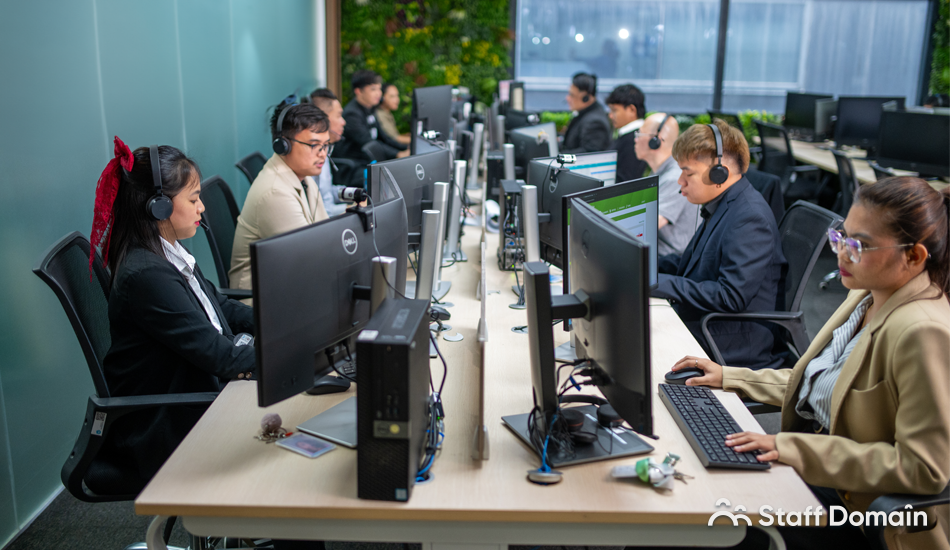
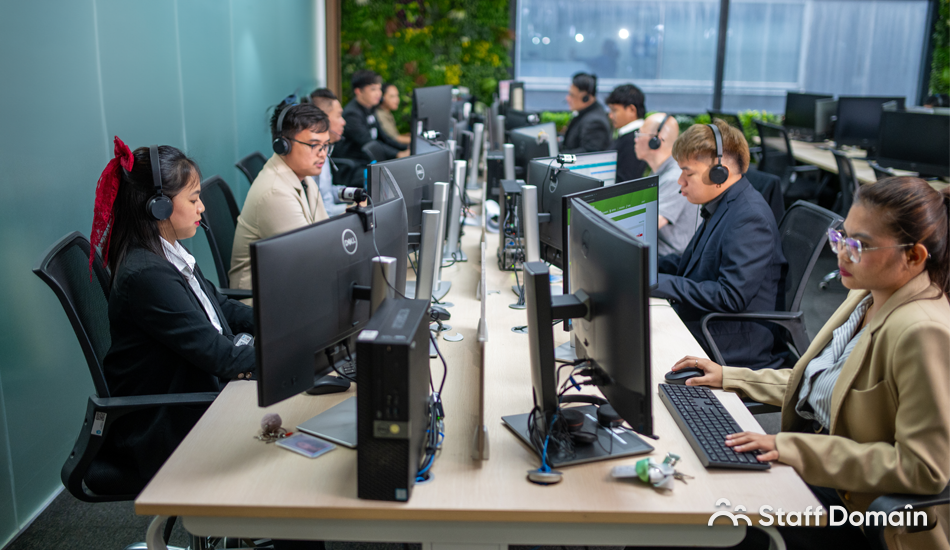
That last model is what this guide means by an offshore graphic design team. The designer learns one brand. They sit in your Teams or Slack channels, work in your Figma and Adobe accounts, join your stand-ups, and answer to someone on your side. After a few months, nobody needs to explain the brand to them.
At Staff Domain, your offshore graphic design staff is employed through our employer of record structure in the Philippines. We handle payroll, benefits, equipment, space, and compliance, they handle the work under your process and systems, while you can focus on the growth.
Why Outsource Graphic Design to The Philippines?
The short answer is scale.
Design is the largest part of the Philippine creative economy, making up 31.6% of creative value added in 2025, according to the Philippine Statistics Authority. The creative economy as a whole reached PHP 2.12 trillion that year, or 7.6% of GDP.
That scale shows in the hiring pool. Designers in Manila and Cebu have worked in in-house brand teams, agencies, e-commerce studios, and for overseas clients. Adobe Creative Suite and Figma are standard, and English is the working language of most briefs.
One finding matters more than the headline numbers. A 2026 WIPO report found many Philippine creative workers are concentrated in routine, outsourced production work. The same report cites TESDA data showing 41% of creative-sector employees could take on more complex roles.
Many Filipino designers are working below their level. The role you write sets the ceiling on what you get. For a view of the wider talent market, see why the Philippines.
Why Do Offshore Graphic Design Hires Go Wrong?
Most offshore graphic design hires go wrong before the designer starts. The cause is almost always the setup:
- No clear manager
The most common client-side factor when an embedded hire does not work out is the absence of a clear day-to-day manager. Gallup estimates managers account for at least 70% of the variance in employee engagement across business units. Design feels this more than most roles, because feedback is subjective.
The fix: Name one person who briefs, approves, and gives feedback.
- A mismatched role
Picture this: the job is scoped and priced for templated social graphics, then the business asks for a rebrand project.
The fix: Define the work, then hire for the level and staffing model it needs.
- A rushed refill
Refilling a seat that has already failed does not make the next hire more likely to last.
The fix: Find out why the last designer left and solve that first.
The first two are settled before you look at a single portfolio, by scoping the work. That is the next step.
How Do You Scope the Work Before You Hire?
Scope comes first, because it decides everything after it: the model, the role, the level, and the cost.
Three questions set the scope:
- What is the work?
Think about what kind of tasks land in the queue. Is it usually output from templated designs? What mediums and platforms are involved? How big and how specialised can the projects get?
- Is the volume steady?
Count how many requests are expected to come in every month. Volume would help point you in the right direction of what staffing model to consider. A full-time designer would need a full load.
- Who will lead the work?
Name who will brief, approve, and give feedback.
From that starting point, write the day-90 sentence. It is one line, in your own words, on what success looks like at three months. For example: “By day 90, they produce all weekly social and sales collateral from our brand kit without art-direction rework.”
That sentence becomes the brief for recruitment, the yardstick for the first review and the reviews that come after that, and the answer when you ask whether or not the hire is working.
Offshore Designer, In-house Designer, Graphic Design Agency, or Freelancer: Which Model Suits You?
There are multiple ways to get design work done, and the trick here is that most businesses end up using more than one.
In-house Graphic Design Staff
Employed directly by your business, in your own country. As the employer, everything from recruitment and payroll to equipment and compliance falls on you.
- Pros: Works face-to-face with your team, suppliers, and customers. Knows your local market first-hand. Can attend shoots, events, and print checks.
- Cons: Every part of employment sits with you. Local searches can take time. The full cost includes superannuation, payroll tax, equipment, employee engagement, office space, as well as salary.
- The right fit: When the work needs a physical presence in your local market, like regular photo shoots, print checks, events, and in-person workshops.
Offshore Graphic Design Staff
Employed through a partner in the Philippines and dedicated full-time to your brand. The partner handles the employment, and you direct the work.
- Pros: Widens your search when local hiring stalls. Your budget can take on a more senior designer or a second hire. Learns one brand and works inside your tools and processes.
- Cons: Needs clear written briefs and one person on your side to lead the work. Feedback happens online, across a two- to three-hour time difference. Cannot attend in-person shoots or events in your market.
- The right fit: For a steady queue of work that can be briefed and reviewed online.
Graphic Design Agency
A team of strategists, designers, and specialists, billed by the project or on retainer.
- Pros: Brings range, fresh ideas, and senior creative thinking. Scales up fast for a launch or campaign.
- Cons: The highest cost per hour of the four. Your brand shares their attention with other clients. Every job needs a brief and a round of revisions to get up to speed.
- The right fit: Ideal for brand strategy, campaign concepts, and major launches.
Freelancer
An independent designer, paid per job or by the hour.
- Pros: Flexible, with no ongoing commitment. Lets you bring in a specialist skill for a single job.
- Cons: Availability depends on their other clients. Brand knowledge can reset with each new freelancer. You manage every brief and deadline yourself.
- The right fit: Great for one-off projects and overflow.
Unsure if you should go with a freelancer or an offshore graphic designer? Read more on our blog Offshore Graphic Designers vs Freelancers: How to Choose.
Again, you don’t have to pick just one. The Association of National Advertisers found in 2023 that 82% of its member brands run in-house agencies, yet 92% still use external agencies too. Brands keep the steady work inside and pay specialists for big ideas. Pair your designer with a creative lead, and bring in an agency when you need fresh thinking.
If your scope shows steady weekly work and a named lead, a dedicated offshore designer is worth building around. The next question is which designer to hire first.
Which Roles Make Up an Offshore Graphic Design Team?
Every design team is built on three core roles, split by level.
This section focuses on the core design group. Specialists such as motion designers, video editors, and UI/UX designers usually join later.
Graphic Designer
- The first hire for most businesses
- Works from your existing brand kit to produce the daily queue: social graphics, sales decks, EDMs, ads, and print collateral
- Suits a scope that leans toward production.
Senior Designer
- Creates new layouts, campaign looks, and brand extensions with little direction
- Hire here first if at least half your scope is design work, or your brand is still taking shape.
Lead Designer or Art Director
- Sets the creative direction, reviews other designers’ work, and protects the brand.
- Worth adding once you have two or more designers, or when nobody on your side can act as creative lead.
A common path is a graphic designer first, then a senior designer as the design work grows. A lead joins once the team needs someone to direct it. Each hire should take work off someone. If a second designer would only split the same queue in half, fix the brief before you add a person.
Each level also carries a different cost, which is the next thing to plan for.
What Does an Offshore Graphic Design Team Cost?
The honest answer depends on the level of work, not the job title.
With Staff Domain, a designer is billed as one all-inclusive monthly fee. It covers their salary, 13th month pay, government contributions (SSS, PhilHealth, and Pag-IBIG), health cover, equipment, an ISO 27001 certified workplace, and ongoing HR and account support. There are no per-project charges.
The fee rises with seniority. An entry-level designer executes clear briefs. A senior designer develops creative directions with little oversight. A lead or art director can guide other designers and protect the brand. Price the role for the design work you need, not the production work you have today.
When you compare the fee with a local hire, compare the full cost on both sides. A local designer’s cost includes superannuation, payroll tax, equipment, software, office space, and recruitment, as well as salary.
Resist the lowest quote. A designer paid below their market will leave for a better offer, deliver less than stellar quality, or both, and you pay for a second search and a second ramp-up.
For current rates by level, see our dedicated offshore graphic designer guide.
How Do You Prepare the Role Before Day One?
Your offshore graphic design staff can only move as fast as your setup allows. Get these things ready before they come in so your new hire is producing real work in week one.
- Make your brand kit hire-ready
Gather logos, fonts, colour codes, templates, and guidelines in one shared folder. Add a set of approved past work and a few pieces you would never run again. Much of a brand’s rules live in people’s heads, and a new designer cannot read those. - Set up one way to request design work
Pick a single channel, such as a form or a board in Asana, Trello, or Monday. Add a short brief template covering the goal, audience, format, sizes, deadline, and examples. Decide who breaks the tie when two or more requests clash. - Establish the approval rules
Decide who signs off on what, how many revision rounds each request type gets, and the turnaround you expect. Clear rules stop feedback from turning into a group chat. - Sort licences and access
Designers need their own Adobe Creative Cloud and Figma seats, licensed fonts, and stock image accounts. Set these up in your business’s name, so the files and accounts stay yours.
Then plan the path forward. Sketch what growth looks like for this designer in their first year, and then after. Knowing that shapes how you scope the first hire and shows candidates the role has a future.
How Should You Hire an Offshore Graphic Designer?
Hire on evidence of the work first, then on fit with the person who will manage it.
Review portfolios against your day-90 sentence, not general taste. A striking editorial portfolio tells you little about someone who must produce 40 social assets a week inside a tight brand kit.
Set a paid design test using a real brief from your queue. Strong designers skip unpaid tests, and the brief shows you how they think.
Finally, run the interviews yourself. The person who will manage the designer should meet them and choose them. At Staff Domain, we shortlist candidates through our Grit Filter, ensuring both the necessary skill set and factors that indicate people who stay, so the decision would only cost you an afternoon. Most first designers are in their seat within three to five weeks of a confirmed brief.
What Should Onboarding Look Like for Offshore Graphic Design Staff?
Onboard them as you would an in-house designer. Gallup found only 12% of employees strongly agree their organisation does a great job of onboarding new staff. Remote hires feel the gaps first and the hardest.
A workable first month looks like this:
- Week 1: Brand guidelines, asset library, fonts, and templates. Accounts on your Figma, Adobe, and project tools. A brand walk-through from the creative lead, including the work they dislike and why.
- Week 2: Low-risk live work with same-day feedback.
- Weeks 3-4: First original pieces, reviewed against the day-90 sentence.
Written comments in Figma and short Loom walk-throughs work well across time zones. The Philippines runs two to three hours behind Australian eastern time, depending on daylight saving, so most of the working day overlaps.
How Do You Measure an Offshore Designer's Work?
Measure against the day-90 sentence, then track four numbers.
- Turnaround
Time from brief to first draft, by request type. - Revision rounds
Rounds before approval. A rising count often points to unclear briefs or mixed feedback. - First-pass approval
How often work is approved with no changes. It climbs as the designer learns the brand.
- Brand consistency
A monthly review of live work against the guidelines by the creative lead.
Review at day 30, day 60, and day 90. At day 30, you are checking the setup. By day 90, you are checking the day-90 sentence. If revisions stay high, check the briefs before you question the designer.
Who Owns the Designs Your Offshore Team Creates?
You do. When you build with Staff Domain, your designers work on your systems and follow your processes. Anything created with your tools and accounts belongs to you.
The contract behind that matters. Under the Philippines’ Intellectual Property Code (RA 8293, section 178.3), work an employee creates in their regular duties belongs to the employer, unless an agreement says otherwise. Under an employer of record model, the legal employer is the EOR provider, so the service agreement is what passes ownership to you.
Before you sign with any provider, check that the agreement assigns IP in the work to you, and keep your files in your own accounts.
How It All Fits Together
Every stage in this guide feeds the next. Your scope tells you which model fits. The model and your production-to-design split point to the right role. The role sets the cost. Preparing that role gives you the brief and the test to hire against. The day-90 sentence you wrote at the start becomes the yardstick for onboarding and every review after it.
That is why the first decision matters most. Get the scope right, and each later choice gets simpler. Skip it, and every stage after it inherits the gap.
The talent is there. Setup decides whether it stays, and setup is the part you control.
If your scope points to a dedicated designer, see how a dedicated graphic designer works with Staff Domain. We help you scope the role, shortlist designers who fit it, and handle the employment, so your team can focus on the work.
FAQ
How long does it take to build an offshore graphic design team?
Hiring your first designer takes three to five weeks with Staff Domain. Most teams add a second role once the first designer, brand kit, and creative lead are working well.
Can you outsource graphic design for a small business?
Yes, if you have steady weekly design work and one person who can manage it. If you don’t, a freelancer or a graphic design agency is the better fit.
Is an offshore graphic design team the same as a graphic design service?
No. An offshore graphic design service delivers jobs you order, often from a shared queue. An offshore graphic design team member works on your brand alone, inside your processes, under your creative lead.
Who owns the work an offshore graphic designer creates?
With Staff Domain, anything your designer creates on your systems and with your tools belongs to you. With any provider, check the service agreement assigns IP to you.
How do you manage an offshore designer in a different time zone?
Give feedback in writing through tools like Figma and Loom, and use the overlap hours for live reviews. The Philippines is two to three hours behind Australian eastern time.
This article is general information, not legal or tax advice. Get advice specific to your situation before acting.