Outsourcing Philippines: The Complete 2025 Guide for Australian and US Businesses
Outsourcing to the Philippines gives Australian and US businesses access to exceptional talent at 50–70% lower cost — without sacrificing quality. The Philippines has become the world’s outsourcing capital for exactly this reason.
But here’s what most guides won’t tell you: outsourcing success depends entirely on how you do it.
The companies that treat offshore teams as “cheap labor” get cheap results. High turnover. Communication gaps. Quality problems. They save money in the short term and lose it in hidden costs.

The companies that treat offshore teams as an extension of their business—with proper recruitment, fair compensation, genuine support, and career pathways—build competitive advantages that compound over time.
Staff Domain exists to help you build offshore teams the right way.
We’re not an outsourcing company. We don’t take over your functions and deliver outputs. Instead, we’re an Australian-led offshore staffing partner that helps you build your own dedicated team in the Philippines—staff who work exclusively for you, not for us.
We handle the hard parts: bespoke recruitment, legal employment, compliance, equipment, facilities, and ongoing HR support. You get a team that’s yours to manage, train, and integrate into your business—without the complexity of setting up your own Philippine entity.
We offer Two Service tracks to Match Your Needs
This guide covers everything you need to know about outsourcing to the Philippines: what it is, why it works, what can be outsourced, how much it costs, and how to avoid the mistakes that derail offshore initiatives.
The Offshore Operating System
What Is Outsourcing to the Philippines?
The term “outsourcing to the Philippines” is used broadly, but it actually covers several different models with very different implications for your business.
Understanding the Different Models
Traditional BPO (Business Process Outsourcing): You contract with a company to take over a business function entirely. They manage the work, the people, and the processes—you receive outputs. Example: You outsource your customer service to a call center that handles everything; you just review reports.
Offshore Staffing (Staff Domain’s Model): You build your own dedicated team in the Philippines. A partner like Staff Domain handles recruitment, employment, compliance, and infrastructure—but the staff work exclusively for you. You manage them, train them, and integrate them into your business. They’re your team, not a vendor’s team delivering a service.
Employer of Record (EOR): A provider becomes the legal employer of staff you’ve selected, handling compliance and payroll while you direct day-to-day work. Similar to offshore staffing but may not include recruitment, equipment, or facilities.
Freelancer/Contractor: You hire individuals directly through platforms. No employment relationship, no provider support, full compliance risk on you.
THE PH ADVANTAGE
Why the Distinction Matters
With traditional BPO, you’re buying a service. With offshore staffing, you’re building a team.
The difference is profound:
Ownership
Your offshore staff learn your business, your systems, your customers. They accumulate institutional knowledge that stays with you.
Control
You direct priorities, processes, and quality standards—not a vendor managing to contract minimums.
Integration
Your offshore team becomes an extension of your onshore team, not a separate silo.
Retention
Staff who feel like part of your company stay longer than staff who feel like interchangeable BPO agents.
When people search “outsourcing to the Philippines,” they often mean “how do I get work done by people in the Philippines?” This guide covers all the approaches, but Staff Domain specifically helps you build dedicated teams—not outsource functions to a third party.
A Brief History of Outsourcing Philippines
The Philippines outsourcing industry began in 1992 when Accenture established operations in Manila. The first major call center, eTelecare, opened in 1997. By the early 2000s, companies like Convergys, Teletech, and HSBC had established significant operations.
The industry grew from a few thousand employees to over 1.8 million today, driven by the Philippines’ combination of English proficiency, Western cultural familiarity (a legacy of American colonial history), and substantial cost advantages.
Today, the Philippines generates over $38 billion annually from outsourcing and accounts for approximately 13% of the global BPO market—ranking first globally for voice-based services.
ABOUT COMPLIANCE
The Philippines Outsourcing Industry: 2025 Statistics and Market Overview
Understanding the current state of the industry helps you evaluate the Philippines as an outsourcing destination.
Key Statistics
| Metric | 2025 Data |
|---|---|
|
Industry revenue |
$38-40 billion |
|
Workforce |
1.82-1.9 million |
|
Share of Philippines GDP |
~10% |
|
Global BPO market share |
~13% |
|
Annual graduate output |
800,000+ |
|
English proficiency ranking |
#2 in Asia (EF EPI) |
|
Projected growth rate |
8-10% annually through 2028 |
Why the Philippines Leads Globally
Several factors explain the Philippines’ dominance:
Mature infrastructure: Over 30 years of industry development means established providers, proven processes, and experienced management talent. You’re not experimenting with an emerging market—you’re accessing a proven ecosystem.
Government support: The Philippine government actively supports the BPO industry through tax incentives (PEZA zones), infrastructure investment, educational partnerships, and regulatory frameworks designed to attract foreign investment.
Scale: With 800+ BPO companies operating across major cities (Manila, Cebu, Clark, Davao), the market offers options for every need—from boutique specialists to enterprise-scale operations.
Talent depth: The combination of high university enrollment, strong English education, and decades of BPO experience has created a workforce specifically trained for international business support roles.
Sustainable Growth
WhyAustralian and US Companies Choose Outsourcing to the Philippines
Cost savings get most of the attention, but companies that succeed with outsourcing recognize multiple strategic benefits.
Significant Cost Reduction
- The salary differential is substantial. A qualified accountant in Sydney earns $85,000-$110,000 AUD annually. A comparably qualified professional in the Philippines earns $15,000-$25,000 AUD equivalent—a 60-75% reduction in direct salary costs.
- When you factor in lower benefits costs (mandatory contributions are a fraction of Australian superannuation), reduced infrastructure expenses, and no recruitment agency fees (with the right provider), total savings often exceed 70%.
- But here's the nuance: the goal isn't to pay as little as possible. The goal is to pay enough to attract and retain excellent talent while still achieving meaningful savings. Companies that pursue the absolute lowest cost often experience high turnover that erodes their savings entirely.
- Staff Domain pays above-market salaries specifically because retention drives long-term ROI better than cost minimization.
Exceptional English Proficiency
- The Philippines ranks second in Asia for English proficiency according to the EF English Proficiency Index, behind only Singapore. English is an official language, the primary medium of university instruction, and widely used in business and media.
- For customer-facing roles, Filipino professionals often outperform alternatives from other regions on accent neutrality and comprehension of Western business contexts. This makes the Philippines particularly strong for voice-based services, content creation, and any role requiring nuanced written communication.
Timezone Advantages
- For Australian businesses, the Philippines operates 2-3 hours behind Sydney—enabling real-time collaboration throughout the Australian workday. Your offshore team isn't working while you sleep; they're working while you work.
- For US businesses, the time difference enables extended coverage. Your Philippines team can handle overnight support, morning preparation, or after-hours processing while your US team is offline. This creates genuine 24/7 capability without requiring your onshore staff to work unusual hours.
Cultural Compatibility
- Filipino culture shares significant overlap with Western (particularly American and Australian) business norms. This stems partly from historical American influence and partly from decades of BPO industry experience serving Western clients.
- Filipino professionals understand Western workplace expectations around communication style, deadline orientation, customer service standards, and professional conduct. Cultural onboarding still matters, but you're not bridging fundamentally different work cultures.
Talent Pool Depth
- The Philippines produces over 800,000 university graduates annually across fields including business, IT, accounting, nursing, and engineering. The BPO industry has been a major employer for decades, creating a workforce experienced in remote collaboration with international clients.
- You're not recruiting from a shallow pool. You're accessing one of the world's deepest offshore talent markets.
CLIMB & SUMMIT
What Can Be Outsourced to the Philippines in 2025?
Almost any knowledge work that can be performed remotely can be outsourced to the Philippines. The country has moved far beyond call centers into specialized professional services.
Customer Service & Support
This remains the Philippines’ strongest category. Functions include:
- Inbound customer support (phone, email, chat)
- Technical support (Tier 1, Tier 2, Tier 3)
- Help desk services
- Order processing and fulfillment support
- Returns and complaints handling
- Customer success and retention
Filipino customer service professionals are known for patience, empathy, and genuine care for customer outcomes—cultural traits that translate directly into service quality.
Finance & Accounting
The Philippines produces thousands of accounting graduates annually, many of whom pursue CPA certification. Commonly outsourced functions include:
- Bookkeeping and transaction processing
- Accounts payable and receivable
- Payroll processing
- Financial reporting and analysis
- Tax preparation support
- Audit support
- Management accounting
For Australian businesses, Filipino accountants can be trained on Australian tax law, MYOB, Xero, and Australian reporting requirements. Many already have experience with Australian clients.
IT & Technical Services
The Philippines has become a significant IT outsourcing hub. Functions include:
- Help desk and service desk support
- System administration
- Network management
- Software development
- Web and mobile application development
- QA testing
- Database administration
- Cybersecurity operations
Marketing & Creative Services
Digital marketing and creative services have grown significantly. Functions include:
- Social media management
- Content writing and copywriting
- SEO and SEM
- Graphic design
- Video editing
- Email marketing
- Marketing automation
- Web design and development
Administration & Virtual Assistance
Virtual assistants from the Philippines handle:
- Calendar and email management
- Travel coordination
- Data entry and research
- Document preparation
- CRM management
- Project coordination
- Executive support
Recruitment Support
For recruitment agencies and HR teams:
- Candidate sourcing
- Resume screening
- Interview scheduling
- Reference checking
- Database management
- Job posting and advertising
- Talent pipeline building
Industry-Specific Functions
Beyond general business functions, the Philippines supports specialized roles:
Healthcare: Medical billing and coding, patient scheduling, claims processing, medical transcription (in HIPAA-compliant environments)
Real Estate: Transaction coordination, listing management, marketing support, property research
Legal: Document review, legal research, paralegal support, contract management
E-commerce: Listing management, inventory tracking, customer support, marketplace optimization
How Outsourcing Philippines Works: BPO vs Dedicated Teams vs Freelancers
The process varies depending on whether you’re using a traditional BPO, building a dedicated team with an offshore staffing partner, or hiring freelancers directly.
Models Compared
| Factor | Traditional BPO | Offshore Staffing (Staff Domain) | Freelancer Direct |
|---|---|---|---|
|
Who manages the work |
The BPO company |
You |
You |
|
Who the staff work for |
The BPO company |
You (exclusively) |
You (non-exclusively) |
|
Recruitment |
Their pool |
Dedicated search for you |
You do it |
|
Employment compliance |
They handle |
We handle |
Your risk |
|
Equipment |
Theirs |
Included for your team |
Your cost |
|
Integration with your business |
Limited |
Full |
Variable |
|
Institutional knowledge |
Stays with vendor |
Stays with you |
Variable |
|
Staff tenure |
Often low |
Higher (your team) |
Variable |
Staff Domain’s approach: We help you build your own dedicated team. We handle the employment infrastructure, but these are your people—they work only for you, learn your business, and become part of your organization.
How Staff Domain Helps You Build Your Team
Here’s how building a dedicated Philippines team works with Staff Domain:
Step 1: Discovery (Week 1)
We start with your business needs—not a job listing. What outcomes do you need? What skills are essential? How will offshore staff integrate with your onshore team? What’s worked or failed in previous offshore attempts?
Your Client Success Manager translates this into detailed recruitment requirements.
For SD Summit clients: We also assess compliance requirements, governance needs, and manager training priorities.
Step 2: Recruitment (Weeks 1-3)
We conduct a dedicated search using our “Grit Filter” methodology—rigorous skills testing combined with behavioral screening designed to identify candidates who will thrive in offshore environments.
You receive shortlisted candidates with detailed assessments. You conduct interviews. You make final hiring decisions.
For SD Summit clients: AI-enabled analytics assess candidate fit and predicted tenure.
Step 3: Onboarding (Week 4)
Once you select a candidate, we handle:
- Philippine-compliant employment contracts
- Government registrations (SSS, PhilHealth, Pag-IBIG)
- Tax registration
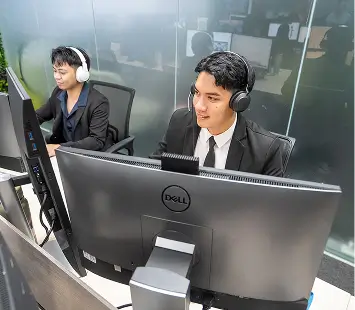
- Equipment provisioning (Dell Core i5, dual monitors, noise-canceling headset)
- Workstation setup (office or WFH)
- Security protocol implementation
- Orientation and initial training
For SD Summit clients: Onboarding includes Dual-Stream Training for both new hires and their onshore managers.
Step 4: Ongoing Operations
Employment doesn’t end at onboarding. Staff Domain handles:
- Monthly payroll and tax remittance
- Statutory contribution management
- Leave administration
- Benefits management
- Performance support coordination
- HR matters and employee relations
For SD Summit clients: Quarterly Route Reviews assess team performance, identify risks, and adjust workforce planning.
Timeline: First hire typically ready within 4 weeks of engagement.
CLIMB & SUMMIT
Two Ways to Build Your Outsourcing Philippines Team: SD Climb and SD Summit
Not every company needs the same level of support. SD Climb and SD Summit are designed for different stages and needs.
SD Climb: Full-Service Offshore Staffing
Best for: Companies building their first dedicated offshore team, or scaling proven functions where reliable capacity is the primary need.
SD Climb removes the complexity of offshore employment so you can focus on managing your team.
What's included:
| Component | What You Get |
|---|---|
|
Bespoke Recruitment |
Dedicated search using our “Grit Filter” methodology |
|
Employment & Payroll |
Full compliance: contracts, payroll, tax, statutory contributions |
|
Professional Equipment |
Dell Core i5 PC, dual monitors, noise-canceling headset |
|
Enterprise Security
|
Biometric access, 24/7 CCTV, disabled USB ports, encryption |
|
Client Success Manager |
Dedicated CSM for onboarding and ongoing support |
|
Premium Benefits |
Above-market salaries, healthcare, wellness programs |
Our commitment: 3-month replacement guarantee if a hire doesn’t work out.
SD Climb is right for you if:
You're building a team of 3-20 people
Your functions are operational (support, admin, finance processing)
You have onshore managers who can direct day-to-day work
You need reliable infrastructure without complex governance
THE SD-OS
SD Summit: Enterprise Governance + Retention Engineering
Best for: Companies in regulated industries, scaling complex operations, or requiring enterprise-grade governance.
SD Summit includes everything in SD Climb plus three additional pillars:

Governance (The Compliance Shield)
For regulated industries—fintech, healthtech, legal, professional services—compliance isn’t optional.
Credential Tracking & Alerts: Automated monitoring of licenses and certifications with 60-day expiry alerts
Audit-Ready Dossiers: Generate compliance reports instantly for internal audits
Bridge Letters: Quarterly letters affirming security controls for enterprise sales and risk assessments

Culture (Dual-Stream Integration)
Offshore failure is often onshore failure. SD Summit bridges the gap with training for both sides.
Stream A (Your Philippines Team): Contextual fluency training. We teach the “Silent No” framework—empowering staff to proactively communicate constraints rather than over-promising..
Stream B (Your Managers): Remote leadership certification. We teach the “Instruction Loop”—confirming understanding before work begins.
Retention Premium: Above-market compensation ensures your team is an asset, not a churn risk.

Performance (Predictive Success Engineering)
We don’t just fill seats. We engineer careers.
AI-Enabled Analytics: Predictive assessment before hiring
Visual Career Mapping: Pre – determined growth roadmaps from Day 1
Funded Masterclasses: Quarterly training in high-value skills (Azure, Xero, Salesforce)
Strategic Navigation
With SD Summit, we move from partner to Expedition Leader:
Quarterly Route Reviews:
Deep-dive business reviews to identify risks and adjust workforce planning
Predictive Hiring:
We pipeline talent before you have vacancies—zero downtime when you need to scale

The Secure Vault:
For data-sensitive operations: sovereign infrastructure with biometric access, locked USB ports, mandatory 2FA, always-on VPNs

Which Track Is Right for You?
| Factor | SD Climb | SD Summit |
|---|---|---|
|
Team size |
3-20 |
10-100+ |
|
Industry |
General business |
Regulated (fintech, health, legal) |
|
Compliance needs |
Standard |
Audit-ready, credential tracking |
|
Manager training |
Self-directed |
Certified remote leadership program |
|
Career development |
Standard |
Funded masterclasses + career mapping |
|
Strategic support |
CSM for operations |
Quarterly business reviews |
|
Security tier |
Enterprise – grade |
The Secure Vault |
Most clients start with SD Climb and graduate to SD Summit as operations mature or compliance requirements increase.
THE NUMBERS
How Much Does Outsourcing to the Philippines Cost in 2025?
Understanding the true cost requires looking beyond salary comparisons.
Salary Comparisons by Role
| Role | Australia (AUD/year) | Philippines (AUD equivalent/year) | Savings |
|---|---|---|---|
|
Customer Service Rep |
$55,000-$65,000 |
$12,000-$18,000 |
70-75% |
|
Accountant |
$75,000-$95,000 |
$15,000-$25,000 |
65-75% |
|
IT Support (L2) |
$70,000-$90,000 |
$14,000-$22,000 |
70-75% |
|
Graphic Designer |
$65,000-$80,000 |
$12,000-$20,000 |
70-75% |
|
Executive Assistant |
$60,000-$75,000 |
$10,000-$16,000 |
75-80% |
|
Software Developer |
$100,000-$130,000 |
$20,000-$35,000 |
65-75% |
Note: Philippine salaries shown are above-market rates that attract and retain quality talent.
Total Cost of Employment
Salary is only part of the picture. True cost includes:
Mandatory Philippine contributions:
- SSS (Social Security): ~10% employer contribution
- PhilHealth (Health Insurance): ~2.5% employer contribution
- Pag-IBIG (Housing Fund): ~2% employer contribution
- 13th Month Pay: 1/12 of annual salary (mandatory)
Infrastructure costs:
- Equipment: $800-$1,500 one-time per employee
- Office space: $150-$300/month per seat (if office-based)
- Software licenses: Variable
- Management overhead: Variable
Provider fees:
- Freelancer platforms: 0-20% service fee
- Staffing agencies: $200-$500/month per employee
- Full-service providers: $400-$800/month per employee (includes more services)
Hidden Costs to Watch For
When comparing providers, watch for costs that aren’t included in headline pricing:
- Recruitment fees: Often 15-25% of annual salary, charged separately
- Equipment costs: $500-$1,500 setup plus ongoing rental
- Termination fees: Charged when employees leave
- Training costs: Onboarding programs billed separately
- Minimum commitments: Volume requirements or contract minimums
Staff Domain’s pricing includes recruitment, equipment, and workspace (for office-based roles). No hidden setup fees. No termination penalties.
ROI Framework
The simplest ROI calculation:
Annual savings = (Australian salary + super + overhead) – (Philippines total cost)
For a role costing $80,000/year fully loaded in Australia that costs $30,000/year fully loaded in the Philippines, annual savings = $50,000 per role.
But the real calculation should include:
- Turnover costs: If you save $50K but your offshore hire leaves after 6 months and you spend 3 months finding a replacement, actual savings are much lower
- Management time: If your managers spend 5 additional hours per week managing offshore staff, that has a cost
- Quality differential: If offshore work requires 20% more revision, that has a cost
This is why provider selection matters. The cheapest option often isn’t the most cost-effective.
Outsourcing Philippines: BPO vs Offshore Staffing vs Freelancer Compared
Not all Philippines providers are the same. Understanding the differences helps you choose the right approach.
BPO vs Offshore Staffing vs Freelancer
| Factor | Traditional BPO | Offshore Staffing (Staff Domain) | Freelancer Direct |
|---|---|---|---|
|
Relationship |
Vendor delivering service |
Partner helping you build your team |
Contractor |
|
Who manages staff |
The BPO |
You |
You |
|
Recruitment |
Their existing pool |
Dedicated search for your needs |
You do it |
|
Staff exclusivity |
Shared across clients |
100% dedicated to you |
Often work multiple clients |
|
Employment compliance |
They handle |
We handle |
Your risk |
|
Equipment |
Theirs |
Included for your team |
Your cost |
|
Facilities |
Theirs |
Available for your team |
Not applicable |
|
Management support |
Account manager |
Dedicated Client Success Manager |
None |
|
Integration potential |
Limited |
Full |
Variable |
|
Cost |
Variable (per transaction/hour) |
Transparent monthly (per person) |
Lowest hourly, variable total |
When to Use Each Model
Traditional BPO makes sense when:
- You want to outsource a function entirely (not build a team)
- You're comfortable with shared resources
- You need to scale rapidly without management capacity
- The function is transactional and well-defined
Offshore staffing (Staff Domain) makes sense when:
- You want staff who work exclusively for you
- You want to build institutional knowledge that stays with you
- You need team members who integrate with your onshore operations
- You value retention and tenure over lowest cost
- You want control over quality, training, and processes
Freelancers make sense when:
- You need short-term or project-based help
- The work is clearly defined and self-contained
- You have capacity to manage contractors directly
- Compliance risk is acceptable
Red Flags to Avoid
Be cautious of providers who
- Quote “from $X/hour” without explaining total costs — The real number is always higher
- Can’t explain their recruitment process — “We have a database” isn’t a methodology
- Don’t discuss retention — High turnover destroys offshore ROI
- Have no physical presence in the Philippines — Remote management of remote teams rarely works
- Won’t share employee satisfaction data — Happy employees perform better and stay longer
- Require long lock-in contracts — Confident providers don’t need to trap you
Questions to Ask Providers
Before engaging any provider:
- What is your employee retention rate?
- How do you recruit—database search or dedicated sourcing?
- What equipment and infrastructure do you provide?
- What happens if a hire doesn’t work out?
- How do you handle compliance and statutory requirements?
- What training and development do you offer employees?
- Can I visit your facilities?
- What security measures protect my business data?
- How are your employees compensated relative to market rates?
- What’s your Glassdoor rating?
KEY CONSIDERATIONS
Common Concerns About Outsourcing (And How to Address Them)
Every company considering outsourcing has concerns. Here’s how to think about the common ones:
"What about quality?"
Quality depends on three factors: who you hire, how you train them, and how you manage them.
The Philippines has exceptional talent—but also mediocre talent, just like any market. Quality comes from rigorous recruitment (not just grabbing whoever’s available), proper onboarding (not throwing people into work unprepared), and ongoing management (not assuming offshore staff can read your mind).
Staff Domain’s “Grit Filter” screens specifically for candidates who will thrive in offshore environments. Our above-market compensation attracts candidates who have options—and choose us.
"Will communication be difficult?"
Less than you expect. Filipino professionals typically have excellent English—the Philippines ranks #2 in Asia for proficiency.
The bigger communication challenge isn’t language; it’s context. Your offshore team doesn’t know your business history, your unwritten rules, or your customers’ preferences. This requires intentional knowledge transfer during onboarding and ongoing communication practices that don’t assume shared context.
SD Summit’s Dual-Stream Training addresses this by teaching your managers how to communicate effectively with remote teams—not just teaching Filipino staff how to understand you.
"How do I know they're actually working?"
This concern usually stems from previous bad experiences or general distrust of remote work.
Legitimate productivity assurance comes from:
- Clear deliverables: Define outputs, not just activities
- Regular check-ins: Daily standups or weekly reviews
- Project management tools: Shared visibility into work progress
- Time tracking: For roles where it’s appropriate
Staff Domain provides biometric attendance verification for office-based roles and compliance monitoring for work-from-home arrangements. But we’ve found that clear expectations and regular communication matter more than surveillance.
"What about data security?"
This is the right question—and one most providers answer vaguely.
Staff Domain implements specific controls:
Physical security: 24/7 guards, CCTV surveillance, biometric access, security inspection on entry/exit, no personal devices on production floors
Network security: Redundant firewalls, BitLocker encryption, disabled USB ports, VPN enforcement for remote work
Personnel security: Background checks, credit/financial screening, employment verification
For SD Summit clients, The Secure Vault provides sovereign infrastructure with additional physical controls for data-sensitive operations.
"What about cultural differences?"
Filipino culture emphasizes relationship-building, respect for hierarchy, and indirect communication. New offshore managers sometimes misread politeness as agreement—when the team has concerns they haven’t voiced directly.
The solution isn’t to pretend cultural differences don’t exist. It’s to create communication practices that account for them. SD Summit’s Dual-Stream Training specifically addresses this by teaching both sides to bridge the gap.
"Is it ethical to pay lower wages?"
This concern reflects good values—but misunderstands the context.
A salary of $15,000 AUD in the Philippines provides a lifestyle comparable to $60,000+ in Australia because the cost of living is dramatically lower. Filipino BPO employees typically earn 2-3x the national average wage, enjoy benefits many local employers don’t provide, and have career pathways that wouldn’t otherwise exist.
The ethical concern isn’t paying less than Australian wages. The ethical concern is paying below-market rates in the Philippines—which increases turnover, reduces quality, and creates a race to the bottom.
Staff Domain explicitly pays above-market salaries because it’s both ethical and effective.
WHY STAFF DOMAIN
Why Staff Domain for Building Your Philippines Team
We built Staff Domain because we saw an industry that had forgotten its purpose.
Most providers optimize for cost—either as BPOs paying minimum wages to interchangeable agents, or as staffing platforms doing the bare minimum. They hope clients don’t notice when tenure averages 8 months and quality suffers.
We optimize for outcomes. We help you build dedicated teams that actually work—because we pay above market, recruit properly, provide real infrastructure, and support both your staff and your managers.
Staff Domain is headquartered in Sydney. Our CEO, Justin Pavsic, lives in Manila and directly oversees Philippines operations. This isn’t a global platform that acquired a Philippines entity—it’s an Australian company built specifically for Australian and US businesses that want genuine alignment with their outsourcing partner.
Our CEO has publicly stated that the outsourcing industry has been “built on cheap salaries and poor work conditions.” Staff Domain was founded to prove you can do outsourcing differently.
We pay above-market salaries. We provide premium benefits. We invest in career development. The result: employees who are genuinely engaged, not just showing up.
What Our Employees Say
Glassdoor tells the story our marketing can’t manufacture:
This is 23% above the HR/staffing industry average—and it matters because happy employees stay. High turnover destroys offshore ROI. Our retention focus protects your investment.
What Our Clients Say
“It’s a very seamless crossover between our Melbourne team and our Filipino team. We constantly get emails from managers about the wonderful service they’ve given to clients.”

“We found it a seamless process from recruitment, onboarding, and up to when the candidates started with us. Overall, the experience was great.”

“The overall communication was superior and second to none. It exceeded my expectations.”

FAQ
Frequently Asked Questions
What is outsourcing to the Philippines and how does it work?
“Outsourcing to the Philippines” covers several models. Traditional BPO means contracting a company to take over a function—they manage the work and deliver outputs. Offshore staffing (Staff Domain’s model) means building your own dedicated team in the Philippines—a partner handles employment and infrastructure, but the staff work exclusively for you and you manage them directly. The right model depends on whether you want to hand off a function or build a team.
How much does outsourcing to the Philippines cost and how much can I save?
Most companies achieve 50–70% cost reduction compared to equivalent local hiring in Australia. A customer service role costing $60,000/year fully loaded locally might cost $18,000–$25,000/year through Staff Domain — all-inclusive with employment, equipment, and support. Outsourcing to the Philippines with Staff Domain starts from $799 per person per month.
What jobs can be outsourced to the Philippines?
Almost any knowledge work can be performed by a Philippines-based team: customer service, technical support, accounting and bookkeeping, marketing, graphic design, software development, virtual assistance, recruitment support, data entry, content writing, and many specialized functions. The Philippines has particularly strong capabilities in customer service, finance, and IT support.
How do I start building a team in the Philippines?
Start by identifying roles that are well-suited for offshore execution—typically roles that don’t require physical presence, have clear deliverables, and can be performed with standard business tools. Then decide whether you want to outsource a function to a BPO or build your own dedicated team with an offshore staffing partner like Staff Domain. Staff Domain offers free consultations to help you develop the right approach.
Is outsourcing to the Philippines legal?
Yes. The outsourcing model is fully legal and well-established. The Philippine government actively supports the BPO industry. When you work with a reputable provider like Staff Domain, your staff are legally employed in compliance with Philippine labor law, tax requirements, and statutory benefit obligations.
What's the difference between outsourcing and offshoring?
Outsourcing means delegating work to a third party (regardless of location). Offshoring means moving operations to another country (regardless of whether you use a third party). “Outsourcing to the Philippines” is offshore outsourcing—using a third-party provider in the Philippines.
Is the Philippines better than India for outsourcing?
Both countries have strengths. The Philippines excels in voice-based services and customer support due to higher English proficiency and closer cultural alignment with Western markets. India has deeper technical talent in software development and IT. For customer-facing roles, marketing, finance, and administrative functions, the Philippines often delivers better results for Australian and US companies.
How long does it take to hire someone through an outsourcing provider?
With Staff Domain, typical time to first hire is 4 weeks from engagement. This includes dedicated recruitment, candidate screening, interviews, and onboarding. Complex or senior roles may take longer. Some providers offer faster timelines, but rushed recruitment often leads to poor fit.
What happens if an outsourced employee doesn't work out?
Staff Domain provides a 3-month replacement guarantee. If a hire doesn’t meet performance standards within this period, we handle compliant separation and recruit a replacement at no additional recruitment cost. This protects you from the risk of a bad hiring decision.
Can I visit the Staff Domain office and meet my team?
Yes. Staff Domain operates physical offices in Ortigas, Alabang, Clark, and Cebu. Clients are welcome to visit, meet their teams, and see our facilities firsthand. We also facilitate virtual events and regular video check-ins for clients who can’t travel.
Start Outsourcing to the Philippines: Build Your Dedicated Team
The talent you need exists. The cost savings are real. The complexity is manageable—with the right partner.
Staff Domain helps you build dedicated offshore teams—staff who work exclusively for you, learn your business, and become part of your organization:
SD Climb
Provides the foundation: bespoke recruitment, professional equipment, legal employment, and dedicated support.
SD Summit
Adds enterprise governance, manager training, and retention engineering for regulated industries and complex operations.
We’re not an outsourcing company. We don’t take over your functions. We help you build your own team in the Philippines—with the infrastructure and support to make it work.
Here's what happens next:
Discovery call
We learn about your needs, timeline, and requirements
Track recommendation
We identify whether SD Climb or SD Summit fits your situation
Custom proposal
You receive transparent pricing for your specific needs
Recruitment begins
Your dedicated search starts immediately upon engagement
Team onboarded
Your first hire is working within 4 weeks
No long-term contracts. No hidden fees. No shared resources.
Just your own dedicated team in the Philippines, professionally recruited, fairly compensated, and ready to work for you.